Monday, February 7, 2011

Chaotic perturbations to avoid falls in elderly - SMILING

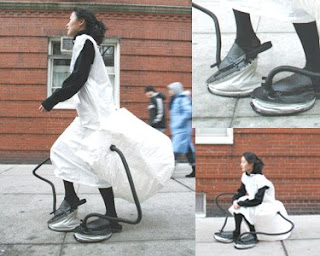
Researchers in Europe continue the good fight against age-related impairments and in favour of social inclusion. Experts from the SMILING ('Self mobility improvement in the elderly by counteracting falls') project, initiated by Step of Mind ltd, focused on prevention of falls by training the elderly to walk on uneven ground while carrying out another activity. The result? A pair of computer-controlled shoes that simulate changes in the height and slope of the ground beneath a user's feet during active walking.

SMILING offers life satisfaction - Headlines - Research – European Commission: "SMILING offers life satisfaction - Headlines - Research – European Commission"

Monday, January 10, 2011

CP before is was CP

Deformations have been attributed to supernatural causes since antiquity. Cerebral palsy was associated with God's wrath, witchcraft, the evil eye, or maternal imagination. Greek scholars recommended prevention by tight swaddling, a custom that persisted into modern times. In the Middle Ages, the midwife's negligence was held responsible as was difficult teething. Morgagni described in 1769 that the neonatal brain can liquefy, and Bednar described leukomalacia in 1850 as a distinct disorder of the newborn. In 1861, Little associated cerebral palsies with difficult or protracted labor and neonatal asphyxia, but he was challenged by Freud, who in 1897 declared that most cases are prenatal in origin. In 1868, Virchow demonstrated inflammatory changes, a view recently confirmed by Leviton and Nelson. Although a causal relationship of cerebral palsy to the birth never has been established, the habit to put the blame for cerebral palsy on someone remained a frequent attitude.

Obladen M. J Child Neurol. 2010

Tuesday, October 12, 2010

Wrist vibration improves arm movements

Effects of Wrist Tendon Vibration on Targeted Upper-Arm Movements in Poststroke Hemiparesis
Megan O. Conrad, Robert A. Scheidt, Brian D. Schmit
Abstract
Background
. Impaired motor control of the upper extremity after stroke may be related to lost sensory, motor, and integrative functions of the brain. Artificial activation of sensory afferents might improve control of movement by adding excitatory drive to sensorimotor control structures. The authors evaluated the effect of wrist tendon vibration (TV) on paretic upper-arm stability during point-to-point planar movements. Methods. TV (70 Hz) was applied to the forearm wrist musculature of 10 hemiparetic stroke patients as they made center-out planar arm movements. End-point stability, muscle activity, and grip pressure were compared as patients stabilized at the target position for trials completed before, during, and after the application of the vibratory stimulus. Results. Prior to vibration, hand position fluctuated as participants attempted to maintain the hand at the target after movement termination. TV improved arm stability, as evidenced by decreased magnitude of hand tangential velocity at the target. Improved stability was accompanied by a decrease in muscle activity throughout the arm as well as a mean decrease in grip pressure. Conclusions. These results suggest that vibratory stimulation of the distal wrist musculature enhances stability of the proximal arm and can be studied further as a mode for improving end-point stability during reaching in hemiparetic patients.

Sunday, July 18, 2010

Stroke statistics - cost and recovery

Total cost of stroke to the United States: estimated at about $43 billion per year
Direct costs for medical care and therapy: estimated at about $28 billion per year
Indirect costs from lost productivity and other factors: estimated at about $15 billion per year
Average cost of care for a patient up to 90 days after a stroke: $15,000
For 10 percent of patients, cost of care for the first 90 days after a stroke: $35,000

Percentage of direct cost of care for the first 90 days:
Initial hospitalization = 43 percent
Rehabilitation = 16 percent
Physician costs = 14 percent
Hospital readmission = 14 percent
Medications and other expenses = 13 percent.

The Effects of a Stroke (from the National Stroke Association):

10 percent of stroke survivors recover almost completely
25 percent recover with minor impairments
40 percent experience moderate to severe impairments that require special care
10 percent require care in a nursing home or other long-term facility
15 percent die shortly after the stroke.

In addition, approximately 14 percent of stroke survivors experience a second stroke in the first year following a stroke.

Saturday, August 8, 2009

Smart/ Intelligent/ Clever crutch

Finally!! At Southampton University. Congratulations! I have been waiting for ten years for it.

A crutch, three accelerometers from Nintendo Wii that detect movement, force sensors for weight measurements, potentiometer for grip, wireless transmitter, and two AAA batteries.

via here and here

Friday, July 24, 2009

No limit to brain plasticity

The right hemisphere of the girl’s brain stopped developing early in the womb and the developing optic nerves reached the optic chiasma, the nerve was drawn to the left.

Scientists have discovered how a 10-year-old girl born with half a brain is able to see normally through one eye. The youngster, from Germany, has both fields of vision in one eye and is the only known case of its kind in the world.

University of Glasgow researchers used Functional Magnetic Resonance Imaging (fMRI) to reveal how the girl’s brain had rewired itself in order to process information from the right and left visual fields in spite of her not having a whole brain. The right hemisphere in the girl’s brain failed to develop in the womb.An MRI scan shows how the nasal retinal optic nerve has connected to the left hemisphere of the brain (image is inverted).

Normally, the left and right fields of vision are processed and mapped by opposite sides of the brain, but scans on the German girl showed that retinal nerve fibres that should go to the right hemisphere of the brain diverted to the left.

Further, the researchers found that within the visual cortex of the left hemisphere, which creates an internal map of the right field of vision, ‘islands’ had been formed within it to specifically deal with, and map out, the left visual field in the absence of the right hemisphere.

Dr Lars Muckli of the Centre for Cognitive Neuroimaging in the Department of Psychology, who led the study, said: “This study has revealed the surprising flexibility of the brain when it comes to self-organising mechanisms for forming visual maps.

“The brain has amazing plasticity but we were quite astonished to see just how well the single hemisphere of the brain in this girl has adapted to compensate for the missing half.

"Despite lacking one hemisphere, the girl has normal psychological function and is perfectly capable of living a normal and fulfilling life. She is witty, charming and intelligent."

The girl’s underdeveloped brain was discovered when, aged three, she underwent an MRI scan after suffering seizures of brief involuntary twitching on her left side.

Apart from the seizures, which were successfully treated and slight weakness on her left side (hemiparesis), the girl had a normal developmental and medical history, attending regular school and taking part in activities such as roller-skating.

In other cases, where patients have half of the brain removed (hemispherectomy), to treat severe epilepsy for example, one field of vision is lost in both eyes – i.e. they see only objects on the left or right side of their vision. In the case of the German girl, her left and right field vision is almost perfect in one eye.An MRI scan clearly showing only one hemisphere of the brain.

Visual information is gathered by the retina at the back of the eye and images are inverted when they pass through the lens of the pupil so that images in your left field of vision are received on the right side of the retina, and images from the right are received on the left. The part of the retina closest to your nose is called the nasal retina, while the other half is called the temporal retina, as it is next to the temples of the head, and both halves have separate nerve fibres which transmit the information received.

Normally, the nerve fibres from the nasal retina cross over in a part of the brain called the optic chiasma and are processed by the hemisphere on the opposite side. The nerve fibres from the temporal retina remain in the same hemisphere, so this means that the left and right visual fields at processed by opposite sides of the brain.

However, in this case, the nasal retinal nerve had connected to the left brain hemisphere.

The scientists believe the right hemisphere of the girl’s brain stopped developing early in the womb and that when the developing optic nerves reached the optic chiasma, the chemical cues that would normally guide the left eye nasal retinal nerve to the right hemisphere were no longer present and so the nerve was drawn to the left.

This implies that there are no molecular repressors to prevent nasal retinal nerve fibres from entering the same hemisphere.

Dr Muckli added: “If we could understand the powerful algorithms the brain uses to rewire itself and extract those algorithms together with the general algorithms that the brain uses to process information, they could be applied to computers and could result in a huge advance in artificial intelligence.”

The study, which was begun by Dr Muckli at the Max Planck Institute for Brain Research in Germany and involved colleagues at the Institute of Medical Psychology at Goethe-University, Frankfurt-am-Main, is published in the ‘Proceedings of the National Academy of Science USA’.

Tuesday, February 3, 2009

TBI: designed for young children

engraving

A year ago a post about traumatic brain injury TBI statistics in children was published. Occasionally, yesterday I saw pictures from The Book of Accidents: designed for young children. It was published in 1831. This masterpiece is illustrated by numerous possibilities to be killed of severely injured. I believe that little readers were impressed for the entire life. As far as most of the engravings demonstrate other 'young children' causing traumas to their friends on purpose, some readers could definitely use the knowledge acquired from the book for causing accidents and not for avoiding them.

Many illustrations are related to TBI, following disability, motor disorders, and, possibly, rehabilitation.

1


1

http://www.jasonrothstein.com/jblawg/wp-content/uploads/2008/07/tumble.jpg

1

1


1

1

1

1

1

1

1

1

Wednesday, October 15, 2008

Tricycle for disabled children

The need of a tricycle for disabled children that are able to cycle is permanent. Several commercially available models are not comfortable, awkward, and non-ergonomic. The devise is to be safe, easy to climb and to get off, ergonomic, and designed for children.

Shabtai Hirshberg from School of Practical Engineering at Hadassah College Jerusalem designed this trike to encourage physical activity among kids suffering from neurological or muscular disorders. It is named A2B. When a child mounts the trike, stepping on the pedal locks the wheels, enabling the child to literally walk right into a seated position. The chest support keeps the child stabilized, and the whole trike can be customized to each child's needs.The gear based rear wheel makes it easy for the child to pedal since less force is required to drive the system. The entire steering shaft is cable driven so very small movements translate into larger ones. שבתאי הירשברג 

שבתאי הירשברג

Now, I hope that Israel, known for its fast commercial implementation and economic stability (I mean the last weeks) will provide entrepreneurs for mass production  of the A2B.

Saturday, August 30, 2008

Strength® Shoe

Science and technology do not stand still. To a broad collection, that included also SoM-ToUR, we can add Strength® Shoe (on the picture).
As far as I can understand the explanations, the summary of the idea is to train while stepping on calves only. Like ladies do, when walk on high heels. Like ladies do, when their high heels are broken.
Reasonable explanations why it is good and a list of about a hundred of sportsmen and tens of commands that train wearing Strength® Shoe may be found on the company site.
Releasing my imagination, I could suppose that high heels of my wife would "increase her anaerobic capacity and your anaerobic power by 500%" (update: in case they will be broken). The second though was much wiser: 'She has several pairs of high heels, each for less than "$129.95 only!"!'

Saturday, June 21, 2008

Euro 2008

People with disabilities take centre stage at the UEFA EURO 2008™ quarter-finals to demonstrate their sporting skills under the slogan "Football for All".

Programme
Matches involving Disability Teams
19 June (Basel): Visually impaired / blind players – Spain v England
20 June (Vienna): Players with learning disabilities – (Special Olympics SO) SO Austria v ÖBSV Austria
21 June (Basel): Players with physical disabilities (Paralympics) – Switzerland v Germany
22 June (Vienna): Players with cerebral palsy – Ireland v Netherlands

The picture below via drugoi are from to-day's game in Basel.


© Reuters/Scanpix


© Reuters/Scanpix


© Reuters/Scanpix


© Reuters/Scanpix


© Reuters/Scanpix


© Reuters/Scanpix


© Reuters/Scanpix

Friday, June 20, 2008

Aquatic therapy - indications, techniques, reasons.


Aquatic therapy or pool therapy consists of an exercise program that is performed in the water. That is for several reasons:
  • Water provides buoyancy and support for the body. When you are neck-deep in water, you only have to support 10% of your actual body weight.
  • In the pool, injured people can exercise with a greater range of motion without hurting joints or re-injuring themselves.
  • The workout gets blood moving faster through the injured area, so it heals faster.
  • Water pressure helps keep down the swelling that often accompanies injury.
  • Aquatic therapy use the resistance of water instead of weights and improves fitness.
Indications for aquatic therapy are plenty:
  • Sensory Disorders
  • Limited Range of Motion
  • Weakness
  • Poor Motor Coordination
  • Pain
  • Spasticity
  • Perceptual/Spatial Problems
  • Balance Deficits
  • Respiratory Problems
  • Circulatory Problems
  • Depression/Poor Self-Esteem
  • Cardiac Diseases
  • Joint Replacement
  • Motor Learning
  • Orthopedic Injuries / Trauma
  • Obesity
  • Prenatal
  • Neurological (MS)
  • Osteoporosis
  • Rheumatology (Arthritis / Fibromyalgia)
And techniques are numerous:
  • Ai Chi
  • Ai Chi Ne
  • BackHab
  • Bad Ragaz
  • The Burdenko Method
  • Feldenkrais
  • Halliwick
  • Lyu Ki Dou
  • Massage
  • Proprioceptive Neuromuscular Facilitation (PNF)
  • Water Pilates
  • Unpredictable Command Technique (UCT)
  • Wassertanzen
  • Water Yoga
  • Watsu
  • Yogalates
I remembered all this just because saw very beautiful pictures of an underwater treadmill for these perposes (along this post). Called HYDRO PHYSIO™ /you can find the Internet site by yourself if you are curious enough/.

I wonder what kind of flood one gets opening the door like on the last photo. Sure, the developers and testers have a lot to tell about it.


Friday, June 6, 2008

Lack of statistics in the Middle East

On the last, 4th EEMCPDM conference that took place recently in Eilat (Israel) Dr. Goldstein mentioned the lack of statistical data on the CP and disability incidence in the Middle Eastern countries.
From my experience I can only confirm this. To my knowledge, the only country that its statistics and epidemiology is known, published in English and always available from the professionals is Israel.
Palestinian Authority published, also in the Internet, its comprehensive statistical report. As far as it is in Arab and I do not read in Arab I can not evaluate what is written there.
Only one peer-reviewed publication may be found in English about disabilities in Jordan.
My recent efforts to find some numbers on the situation in Egypt and Morroco were totally unsuccessful.
Once, my colleague from Jordan told that trying to found out the numbers and its yearly dynamics we found very interesting facts. Once, CP incidence was very-very low in Jordan. The children with CP just not survived. Then, several years ago the numbers increased to un-normally high (comparing to the European). The reason was some dissemination of the CP topic among MDs and PTs and massive mis-diagnosis.
If you need to make any calculations for these countries in order to conduct a clinical trial or market survey, or humanitarian action, you have no other way, but to base your calculations on the US or European statistics. On the other hand there is a wide field of challenges for epidemiological studies.

Sunday, June 1, 2008

Who invented physiotherapy? /at least, fitness trainers/

Dr. Gustav Zander -
Jonas Gustav Wilhelm Zander (1835–1920) was a Swedish physician who invented a therapeutic method of exercise carried out by means of special apparatus such as that seen here. Zander began his work in the 1860s and established the Zander Institute in London, where he published Mechanical Exercise: A Means of Cure (1883) before coming to New York. His hope was that his equipment, which employed gradual muscle resistance, would supplement normal gymnasiums that excluded women, older people, and "weakly" people of either sex.

Walking on books

As far as SoM's approach means walking on changing surfaces that can not be predicted, the idea of Hungarian artists may also be useful. © AP/Scanpix

The level of difficulty may be increased from lullabies with pictures through fantasy to enciclopedias.

© AP/Scanpix

Friday, March 7, 2008

Walking In My Shoes...

A shoe may be a perfect a container for different mechanisms. A shoe may be a mechanism by itself. Or a mechanism may serve as a shoe.

Starting with a simple air pump.

About combination of iPod and Nike most people heard.

And if we mention MP3 shoes, meet Dada.
And if we mentioned Nike, let's mention their competitors - Adidas footings that have a computer chip and a tiny motor built into its sole and continually adjust itself to a runner's size, pace, terrain and even fatigue level. See details here.
And if we talk about Adidas, it runs a mutual project with Polar to develop a system that includes advanced heart rate monitoring built directly into the apparel, along with speed and distance measurement integrated into the shoes.

The Responsive Environments Group from MIT has some incredible developments. Here are two of them.

One can also convert the energy of his mass lifting during walking by inflating a stool to rest after exercise.
Georgia Tech scientists produced a super-duper nanogenerator that they plan to incorporate in shoes too.
Another interesting device restricts TV watching time by walking time. More your kid walks (runs, play outside), more TV he gets.
GPS in the sole is not a new idea, but specialized GPS Alarm Shoes for Sex Workers are also available.
Shoes that have adjustable heel height have different solutions. This, for example, may be up to 38°.
Heels may be interchangeable.

Electric Cinderella shoe is aimed for self defense.
Tap-n-bass is a pair of wired-up tap shoes are picked-up by piezo contact microphones and remixed live, resulting in drum-n-bass-inspired music.

A kids' toy for some boubtful walking communication.
Just for $50 you can have flip flops with a hidden pocket. I suppose, it is worthy if you carry more than $50 to a beach.

ArchPort shoes are designed similarly. And cost similarly.
And more cool things that are not in this post. For example, SoM-TOUR sandal.